


The clarinet is a single-reed woodwind aerophone, distinguished by its essentially cylindrical bore tube. The sound is generated by the vibration of a single cane reed attached to the mouthpiece, in response to the player's breath. Its most notable acoustic characteristic, resulting from its cylindrical bore closed at one end (the mouthpiece), is the fact that it acts as a closed tube: it produces only the odd harmonics of the harmonic series and, unlike the flute or oboe, it overblows at the twelfth (an octave and a fifth) and not at the octave.
Historically, the clarinet evolved in the early 18th century from the chalumeau, a rustic single-reed instrument. The invention is often attributed to Johann Christoph Denner, from Nuremberg, who added keys that allowed access to a brighter upper register (known as the clarino register). During the late 18th and 19th centuries, the instrument underwent successive mechanical redesigns. Currently, the two dominant key systems are the Böhm system (standard in most of the world) and the Oehler system (predominant in German-speaking countries). It is an instrument of enormous technical agility and great dynamic range.
Teachers
Courses with this instrument
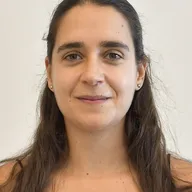
Born in Setúbal, she began her musical studies in 2002 at the Sociedade Musical Capricho Setubalense and the Conservatório Regional de Setúbal. She holds a Bachelor's degree from the Academia Nacional Superior de Orquestra and a Master's degree in Music Education from the Universidade de Évora. She attended the Master's program in Performance at the Universidade de Évora and Post-graduate studies in Music Neurosciences at the Universidade Católica Portuguesa. She attended masterclasses with Nuno Silva, Luis Gomes, Rui Martins, Paulo Gaspar (Portugal), Guy Deplus, Paul Meyer, Nicholas Baldeyrou, Michael Portal, Dominique Vidal, Etienne Lamaison (France), Karl Leister, Sebastian Manz (Germany), Nicolas Cox (England), Camilo Irizo, Radovan Cavallin, Juan Ferrer, Javier Balaguer, Josep Fuster, Cristo Barrios (Spain).
Her experience in music education across various fields has been developing continuously since 2009. Currently, she is a clarinet teacher at the Conservatório de Música de Loulé - Francisco Rosado and at the Sociedade Filarmónica Artistas de Minerva in Loulé. She maintains regular activity with the Lisbon Symphony Orchestra and in the field of Chamber Music with the CKLAVI trio.