


The bassoon is a double-reed woodwind instrument. Morphologically, it stands out for its long conical bore tube, which measures approximately 2.5 meters in total length. To become physically manageable, the tube is folded back on itself in a "U" shape, articulating into four wooden sections coupled to a base piece, the boot. The sound is generated by the vibration of two cane reeds, connected to a curved metal tube (the bocal), which is inserted into the instrument.
Acoustically, the conical bore causes the bassoon to overblow at the octave, unlike cylindrical bore instruments. Its timbre is characteristically dense and velvety in the low register, becoming considerably more penetrating and nasal in the high register.
Historically, the bassoon evolved from the Renaissance dulcian, an instrument carved from a single block of wood. The transition to construction in separate joints occurred in France during the 17th century. In the 19th century, the instrument underwent its most profound acoustic and mechanical reform. Through the work of Carl Almenräder and Johann Adam Heckel, the "Heckel system" was born. This German system optimized the tuning and key mechanism, becoming the dominant construction standard worldwide.
Teachers
Courses with this instrument
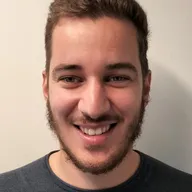
Tiago Martins began his studies in bassoon at ARTAVE, continuing at the Escola Superior de Música e Artes do Espetáculo and completing his Master's in Music Education at the Escola Superior de Música de Lisboa.
Throughout his career, he worked with conductors such as Ernest Schelle, Thomas Sanderling, Paulo Martins, Pedro Carneiro, and Jean-Sébastien Béreau. He participated in masterclasses with Günter Pfitzenmaier, Lindow Watts, Marc Trénel, Roberto Giaccaglia, Steve Harriswangler, Giorgio Mandolesi, and Gustavo Nunez. He was awarded prizes in the Prémio Jovens Músicos (Chamber Music) and the Concurso Terras La-Salette (Bassoon).
Enquanto docente, colaborou com o Conservatório de Música de Cascais, Conservatório de Música D. Dinis, Sociedade Filarmónica Gualdim Pais e Conservatório das Caldas da Rainha,
As a performer, he collaborated with the Cascais and Oeiras Chamber Orchestra, Portuguese Philharmonic Orchestra, Thomar Symphony Orchestra, Portuguese Symphonic Band, Lisbon Metropolitan Orchestra, Portuguese Chamber Orchestra, Algarve Symphony Orchestra, among others.
Atualmente, é professor de fagote no Agrupamento de Escolas Luís António Verney e no Conservatório de Música de Loulé – Francisco Rosado; coordenador das Oficinas de Composição e Música de Câmara na Câmara Municipal de Sintra; e Diretor Artístico da Sociedade Filarmónica Fraternidade de Carnaxide.